Once upon a time ….
Throughout history beaches were scorned as no go areas synonymous with danger, too exposed and vulnerable to all manner of hazard, from storms and tsunamis to pirates and sea monsters. They were no place any one of any sense wanted to hang around any longer than duty required. People built their shelter inland and in the mountains, daring to hit the beach and dip their toes into the sea only when required.
The prejudice against beaches began to turn in the18th century when a few doctors in Britain had the crazy idea that certain maladies were best treated by their patients bathing in the country’s cold sea waves.
And the seaside finally became the go-to place in the early 19th century when pollution from the industrial age factories reached a critical point in Britain’s burgeoning cities and a new fangled invention – railways – gave depressed inhabitants the chance to get the hell out to their local beaches.
Fast forward 150 years to another transpiration revolution, the launch of cheap air travel in the 1960s, when suddenly ever more people could afford to venture further afield … until today when the search for the Perfect “Top” Beach has reached to every corner of the globe.
And the Perfect “Top” Beach is …
Opinions about what makes a Top Beach varies widely, as they do about certain seafoods, like oysters: what is ambrosia for one person is cyanide for another.
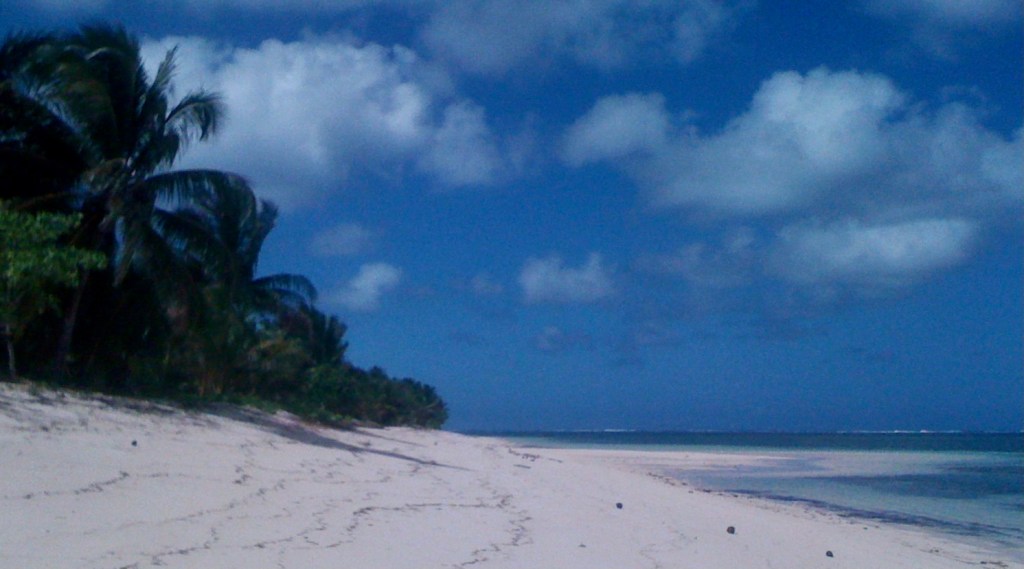
There is a universal preference for a beach’s sand to be soft and fine, tending towards pale brown, even white. And invariably it helps to have crystal clear turquoise water on one side of the sand with some foliage, preferably palm trees, for shade on the other.
Beyond these essentials Top Beaches may come in all shapes and sizes. For some the ideal is an easily accessible wide crescent offering stunning views of sunsets on the horizon, for others it’s a remote small cove with calm water locked in my cliffs.
For some it is a hidden, virtually pristine beach that promises Robinson Crusoe isolation, where it is possible to feel lost, like the only person on the planet.But for others a Top Beach is the precisely the opposite: it has to be easy to get to and highly developed, drawing in bustling crowds and offering them unlimited activities, from room service by the water to kite surfing and late night discos.
A tropical paradise …
Whatever the definition of your Top Beach, The Philippines is well placed to answer the requirements as it is a 1,800 km / 1,200 m long archipelago of 7,107 tropical islands ranging from two large islands, Luzon and Mindanao, that bookend the archipelago to the north and south, down to hundreds of tiny sparsely populated outposts and myriad atolls that change shape with the tides.
Many of these islands are a reasonable size with towns and cities surrounded by vast expanses of mountain ranges and tropical rain forests offering abundant flora and fauna but far more of them are smaller virgin territories best suited to doing nothing but chilling out.
However, all of them, large and small, offer dreamlike soft sand beaches with crystalline waters protected by world class coral reefs on one hand and shady swaying palm trees on the other.
Luzon has it all …
When it comes to the search for a Perfect Top beach amid the variety in the Philippines, Luzon has an advantage over the country’s other 7,106 islands – it is the largest of them all with more attractions and more beaches.
Unusually shaped, distinctly more oblong than circular, it resembles a narrow-waisted, spindly-legged chef with a large head sporting a huge chef’s hat.
It varies from a bulky, mountainous top third – the chef’s hat – through a chunky, highly urbanised middle third – the chef’s face, with Manila Bay as his mouth – to the bottom third, a long, ragged mass – the chef’s skinny chest and legs – the whole surrounded by outstanding beaches, coves and islands.
And what a complex island this strange mass is!
On the one hand, it is known globally for magnificent inland attractions: from Manila, the country’s capital, to natural splendours, like the mountainous rice terraces and caves in the north; spectacular volcanoes, like Mt Mayon and and Taal in the south; and outstanding Spanish architecture from the 17th century.
But Luzon remains a tropical island with more than 5,000 km / 3,000 miles of coastline, much of it indented with fine bays and coves, not to mention 100s of off-shore islands – all harbouring potential Top Beaches
Actually, there used to be great beaches on Manila’s doorstep, along Manila Bay, especially stretching south from the mouth of the Pasig River. But no growing city gets to be a global player without sacrificing a few amenities. Those beaches were lost long ago to land reclamation and pollution.
The payback for this loss to progress is Manila now offers fast access to many more beaches that are even more spectacular and less crowded.
Finding your way around Luzon ….
Manila, the country’s capital, makes the logical starting point for any hunt for Luzon’s Top Beaches because it is not only the first port of call for most visitors to the country but the starting point for the comprehensive network of roads and buses which reach every corner of the island and to all its beaches.
Starting from Manila, the easiest way to understand Luzon’s vast number of beaches is in terms of the island’s 17 coastal Provinces.
These Provinces come in a bewildering variety of shapes and sizes – from bite sized to gargantuan – and the borders between them are entirely invisible. However, they are handy for grouping Luzon’s beaches together, starting with the Province of Bataan, on the far side of Manila Bay, just 30 km / 20 m west of Manila as the crow flies.
 Inside-Philippines.Com
Leave a comment